The names
Twelve picks on what a label is called
How to answer this page. Every decision below ends with its own answer line. Reply in chat, one line per decision, in any order: ID: CONFIRM · ID: CHANGE: what you would change · ID: LEAVE OPEN: what you still need to see — plus anything else you want on the record. Every number on this page was read from the database on 2026-08-25; the queries are stored beside the values.
N-01Launch Film · short
Do we drop the word “film” from Launch Film and store the bare word Launch, and let a launch that really is a film still read as a launch film on screen?
The word on a piece — its label, the one word that says what kind of thing it is — should not decide the medium, and this pick is the one your own worry started: “having the word ‘film’ implies film (feels higher end) and or always video what if its a static isntagram post etc.”
A launch announced in an article and a launch announced in a film are the same kind of piece, so the bare word Launch survives the medium where Launch Film does not — and a launch that really is a film still reads as a launch film on screen, because whether a piece is a film is something we already know about it without putting the word into its name; showing it that way is part of what this mark settles, and it is not built yet.
The library makes the case almost comic: the whole launch population today is a single piece, Nike's “NIKE MIND USER GUIDE”, so the rename costs one row and buys a medium-neutral kind forever.
My take: Rename it to Launch — this is the cheapest call in the whole review, and keeping Launch Film buys you nothing, because a launch that is a film still reads as a launch film wherever it is shown.

Nike · YouTube · 2026-06-05 · written on it: product launch — on your list as Launch film · source
What changes
One word on your list reads Launch instead of Launch Film, and exactly one stored piece is rewritten to carry it.
What stays exactly as it is
The Nike piece keeps its place, everything else written on it is untouched, and “launch film” still reads on screen whenever the piece is a film.
| Pieces carrying this word today | 1 |
|---|---|
| Live pieces in the library, for scale | 13,938 |
Where this was worked out: the naming section of the recommendation page — the “Film” problem, pressure-tested against your static-Instagram-post worry
N-01: CONFIRM · N-01: CHANGE: what you would change · N-01: LEAVE OPEN: what you still need to seeN-02Manifesto / Anthem Film · short
Do we store the bare word Manifesto, keeping anthem and anthem film as spellings that still find it, or keep the Film suffix?
A manifesto delivered as a static poster is still a manifesto, so the same test that renames Launch renames this one.
The pick also carries a rule you gave us, in your own words on 16 August — “we should never have like slashes or things like that in our data ontology taxonomy” — so the slash goes, Manifesto becomes the single saved word, and anthem and anthem film are kept as spellings that still find it when someone types them.
Nothing is stored under either spelling today, so the pick costs no rows; keep the suffix instead and the saved word simply becomes manifesto film.
My take: Rename to Manifesto — the nearest thing the library actually holds today, Nike's cricket anthem “Between the creases, only one rule applies”, is filed as a commercial and would stay one either way, so this word is being chosen for what arrives next rather than for anything already collected.

Nike · YouTube · 2026-06-07 · written on it: commercial — on your list as Commercial / spot · source
What changes
One new word joins your list as Manifesto rather than Manifesto / Anthem Film, and two older spellings resolve to it.
What stays exactly as it is
No stored piece changes. On the day you confirm, the number of pieces carrying this word is zero.
| Pieces carrying Manifesto, Anthem or Anthem Film today | 0 |
|---|
Where this was worked out: the naming section of the recommendation page — the “Film” pressure-test, read together with your no-slashes rule
N-02: CONFIRM · N-02: CHANGE: what you would change · N-02: LEAVE OPEN: what you still need to seeN-03Campaign Film · short
Does Campaign Film survive as its own kind at all, or is a campaign's film just a brand film or a product film that happens to belong to a campaign?
You asked where Brand Film, Campaign Film and Brand Story genuinely differ, and this is the honest answer to the middle one: a film made for a campaign is already a brand film, a product film or a launch piece, plus a membership in that campaign.
That membership is a fact we already keep, and so is the part each piece plays in the campaign — which one leads it, which ones support it, and which ones stand as its proof — so writing “campaign film” on the piece as well would restate the container it already sits in, the exact defect this whole round of work removes.
Nothing is stored under it, so merging it away is free; keep it instead and its definition has to say what it names that the membership does not.
My take: Merge it away and let the campaign a piece belongs to do the work it is already doing — the two pieces below are the test: Nike's cricket commercial sits inside “Beat the Odds: Cricket Edition”, the Sora Matinée short beside it belongs to no campaign at all, and neither one would be one bit clearer for being called a campaign film.
Nike · YouTube · 2026-06-07 · written on it: commercial — on your list as Commercial / spot · source

OpenAI · TikTok · 2026-06-17 · written on it: brand film · source
What changes
One candidate word never joins your list. Nike's “Between the creases, only one rule applies” stays a commercial and keeps its place in the campaign “Beat the Odds: Cricket Edition” — its place in that campaign is what says it belongs there, not a word written on the piece.
What stays exactly as it is
Every piece that belongs to a campaign keeps that belonging exactly as it is, and no piece anywhere gains or loses a word.
The Sora Matinée short above stays a brand film and stays in no campaign — it is on this card to show the other half of the picture, because belonging to a campaign is a separate fact about a piece and most of the library has no campaign at all.
| Live pieces that belong to at least one campaign | 312 |
|---|---|
| Live pieces that belong to no campaign | 13,626 |
| Campaigns the Sora Matinée short above belongs to | 0 |
Where this was worked out: the naming section of the recommendation page — Brand Film versus Campaign Film versus Brand Story
N-03: CONFIRM · N-03: CHANGE: what you would change · N-03: LEAVE OPEN: what you still need to seeN-04Brand Film · short
Do we keep the word Brand Film, given that its static twin is already a word of its own?
Brand Film passes the test Launch Film failed: nothing static would ever be filed here, because a static brand piece is a Key Visual or a Brand Story post, both already words on your list, so “film” is honest rather than decorative.
What the real rows add is a warning about the definition rather than the name — today's 136 brand films include TikTok-native Sora shorts, which tells you the classifier reads the word generously.
A phone-shot Sora short and a cinematic anthem currently share one word, and that is a job for the definition pass, not a reason to rename.
My take: Keep it — the two pieces below are the evidence for both halves of that, because the Sora Matinée short “🥹 We’re not crying, you’re crying. Today’s Sora Matinee: Thank you, mom” and “Deflated” — companion piece to “Air Head”; shy kids × Sora — are both genuinely films, and both are looser and shorter than the word suggests.
OpenAI · TikTok · 2026-06-17 · written on it: brand film · source

OpenAI · TikTok · 2026-06-17 · written on it: brand film · source
What changes
Nothing. The word stays exactly as it is, and the tightening happens later, in words rather than in data.
What stays exactly as it is
All 136 pieces keep the word they carry, and how tight “film” reads is settled when the definitions are written.
| Pieces carrying Brand Film today | 136 |
|---|
Where this was worked out: the naming section of the recommendation page — the row where “film” survives because the static sibling already has its own name
N-04: CONFIRM · N-04: CHANGE: what you would change · N-04: LEAVE OPEN: what you still need to seeN-05Product Film · short
Do we keep the word Product Film, on the same reasoning that keeps Brand Film?
A product piece that arrives static is a Product Shot or a Feature Overview, both already on your list, so Product Film keeps its word honestly — same test, same answer as Brand Film.
The static sibling is not hypothetical: “Image 1: Choice AI phone screens in Furusato Choice app” is one of the 10 product shots the library already holds, and nobody would ever have filed it as a film.
Nothing is stored under Product Film yet, so no rows move whichever way you mark it.
My take: Keep it.

OpenAI · its own website · 2026-06-06 · written on it: product shot · source
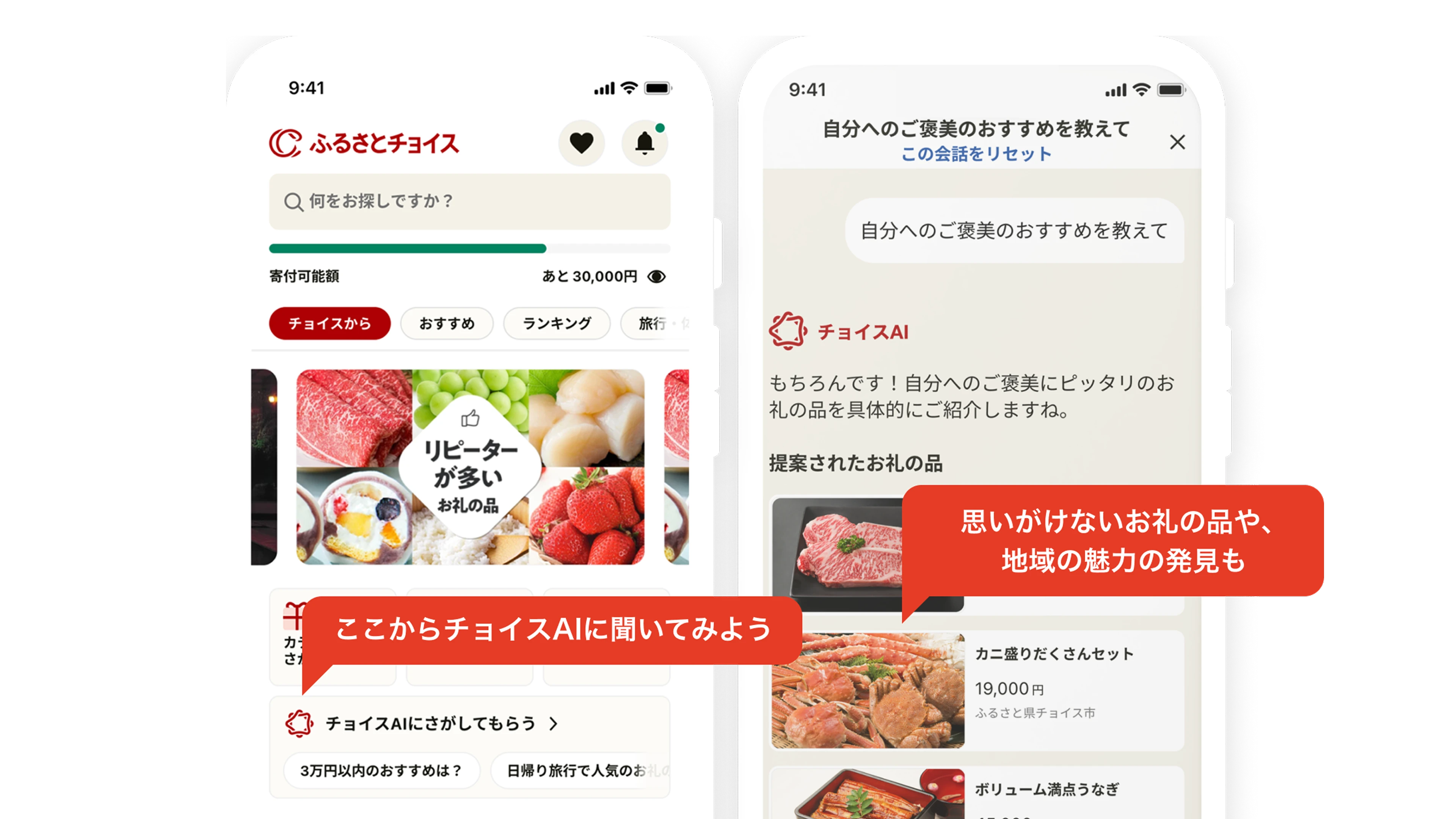
What changes
Nothing on your list changes.
What stays exactly as it is
The 10 product shots keep their word, and Product Film stays a word waiting for its first piece.
| Pieces carrying Product Shot today, the static sibling | 10 |
|---|---|
| Pieces carrying any of the not-yet-live words on these cards | 0 |
Left off this page on purpose: “Choice AI phone screens…” — the same piece is on this page with its title untruncated — “Image 1: Choice AI phone screens in Furusato Choice app” — so the only thing dropped is the old card's ellipsis
Where this was worked out: the naming section of the recommendation page — the “Film” pressure-test row for Product Film
N-05: CONFIRM · N-05: CHANGE: what you would change · N-05: LEAVE OPEN: what you still need to seeN-06Event Film · short
Do we keep the word Event Film, knowing that a later card may replace it with Recap?
An event captured static is an Event Photo, which is already a word of its own, so Event Film passes the keep test the way Brand Film does.
There is one echo to hold beside it: Recap, a candidate mined from your old lists on card X-03, covers the same kind and does not assume the piece is a film, so the two rulings ride together and can be taken in one pass.
Today 61 pieces carry Event Film, among them the OpenAI video that opens “Earlier this week, we held our first-ever OpenAI Partner Summit” and the EMEA Financial Services Summit clip beside it.
My take: Keep Event Film for now and let X-03 decide whether Recap is the better, medium-neutral word — one pass, not two.

OpenAI · LinkedIn ad library · 2026-07-06 · written on it: event coverage — on your list as Event film · source

OpenAI · LinkedIn ad library · 2026-07-06 · written on it: event coverage — on your list as Event film · source
What changes
Nothing changes today.
What stays exactly as it is
All 61 pieces keep their place. If X-03 later renames the word to Recap they still keep their place, because changing a word on a list never changes where a piece sits.
| Pieces carrying Event Film today | 61 |
|---|
Where this was worked out: the naming section of the recommendation page, read against the Recap candidate on card X-03
N-06: CONFIRM · N-06: CHANGE: what you would change · N-06: LEAVE OPEN: what you still need to seeN-07Product Launch — a second word, or not · short
Should “Product Launch” be a second word on your list beside Launch, or is Launch plus the product a piece announces already enough to say it?
On 17 August you asked for a Product Launch on the Product & Feature shelf — a shelf is just a group you browse the list of words by — kept separate from Product Film.
With the bare-word rename on the first card there is one medium-neutral Launch, and what was launched — a product, a feature, the brand — is something the piece already tells you, because it is tied to the product and the feature it announces, so a piece can be shown to you as a product launch without Product Launch having to be a second word on your list.
The one piece behind Launch today is already product-flavoured, so nothing is lost either way; if you want it stored regardless, say so and it joins your list, and the question of which group it sits in — Campaign, or Product & Feature — rides with your mark.
My take: Don't add it as a second word — that would leave you two places to look for the same thing on a day when the piece already tells you which product it launched.
Nike · YouTube · 2026-06-05 · written on it: product launch — on your list as Launch film · source
OpenAI · its own website · 2026-06-06 · written on it: product shot · source
What changes
One word fewer on your list than you asked for. A piece still reads as a “Product Launch” on screen, because it already says it is a launch and already says which product it launched.
What stays exactly as it is
Everything already written on the Nike piece stays written, and no link, no word and no piece moves.
| Pieces carrying Launch today | 1 |
|---|---|
| Pieces carrying Product Launch as a separate word today | 0 |
Where this was worked out: the naming section of the recommendation page — your Product Launch ask of 17 August
N-07: CONFIRM · N-07: CHANGE: what you would change · N-07: LEAVE OPEN: what you still need to seeN-08Commercial versus Brand Film · short
Do we keep Commercial as its own word, with a written note saying how it differs from Brand Film?
Your worry was exact — “are you saying commercials based on the channel?” — and the answer is no.
A Commercial is a kind of piece defined by its editorial contract: short, offer- or product-forward, made to run as an advertisement, and it stays a commercial when it is posted organically, while a Brand Film is long-form brand storytelling; where either one actually ran is a separate fact, stored separately.
The two pieces below make that boundary readable in a glance, and the weight behind them is 55 commercials against 136 brand films.
My take: Keep it, with the boundary written into the definition: Nike's “Get Ada Her Way. Can anyone stop forward Ada Hegerberg?” is short, product-forward and built to run as an ad — it ran on YouTube and is still a commercial — while “Thank you, mom”, the Sora Matinée piece, is brand storytelling with no offer in sight.

Nike · YouTube · 2026-06-06 · written on it: commercial — on your list as Commercial / spot · source
OpenAI · TikTok · 2026-06-17 · written on it: brand film · source
What changes
Nothing on your list. A note joins the definition when definitions are written, saying what Commercial is confused with and on what grounds — length, offer-forwardness, made-to-run-as-an-ad, never where it ran.
What stays exactly as it is
All 55 commercials keep their word, and the record of where each one ran stays where it is, beside the word rather than inside it.
| Pieces carrying Commercial today | 55 |
|---|---|
| Pieces carrying Brand Film today | 136 |
Where this was worked out: the naming section of the recommendation page — “Commercial vs Brand Film — it is NOT the channel”
N-08: CONFIRM · N-08: CHANGE: what you would change · N-08: LEAVE OPEN: what you still need to seeN-09Offer — the one word still unsettled · short
Do we take Offer off the list of kinds and record the deal as marketing intent on whatever piece carries it?
This is the one word you left unsettled, and your own lean is already on the record: “what is an offer promotion — wouldn’t that be like a product campaign,” with the deal tagged as marketing intent.
Removing it means the piece keeps its real kind — a promotional ad, a key visual, a social post — and the offer becomes an intent recorded on it; keeping it means Offer stays a kind for pieces whose whole identity is the deal.
Nothing is stored under it, so removing it costs no rows, and marking it removed empties the one group of words you left open.
My take: Remove it, as you leaned — an offer is something a piece does, not something a piece is, and the French ChatGPT ad below is an advertisement image first, with its offer recorded as a second fact about it.

OpenAI · LinkedIn ad library · 2026-06-12 · written on it: advertisement image — on your list as Promotional ad · source
What changes
One candidate word never joins your list, and the offer itself is recorded as an intent on the piece's real kind instead.
What stays exactly as it is
No piece changes, because no piece carries this word today. The next card's table of slash pairs simply loses its Offer row.
| Pieces carrying Offer or Promotion today | 0 |
|---|
Where this was worked out: the naming section of the recommendation page — “Offer, the one still-open word, confirmed here”
N-09: CONFIRM · N-09: CHANGE: what you would change · N-09: LEAVE OPEN: what you still need to seeN-10The slash names, as one batch · short
Do we confirm the whole table of slash names in one go — seven pairs becoming seven single words, each keeping its old spelling as a way of finding it?
Your rule, word for word, as you said it on 16 August: “we should never have like slashes or things like that in our data ontology taxonomy”.
Applied everywhere at once it reads: Manifesto (anthem) · Commercial (spot, TVC) · Interview (Q&A) · Offer (promotion) · Course (lesson) · Brand Story (origin story) · Installation (booth piece) — seven pairs, seven single words, every old spelling still resolving when someone types it.
Only two of those pairs have anything stored behind them today, Interview with 114 pieces and Commercial with 55, and the Offer row rides the card before this one: remove Offer there and this row simply drops.
My take: Confirm the batch and strike any single row in your note — the two OpenAI pieces below are among the 114 already filed as interviews, the one row in this table with real weight behind it, and they keep their word either way.

OpenAI · LinkedIn ad library · 2026-06-12 · written on it: interview — on your list as Interview / Q&A · source

OpenAI · X · 2026-06-15 · written on it: interview — on your list as Interview / Q&A · source
What changes
Seven names lose their slash. The older spellings — anthem, spot, TVC, Q&A, promotion, lesson, origin story, booth piece — are kept as words that still find the right one.
What stays exactly as it is
Nothing is lost and nothing is rewritten on a piece: type the old word and it saves as the new one.
| Pieces carrying Interview today, the biggest live row in the table | 114 |
|---|---|
| Pieces carrying Commercial today, the only other live row | 55 |
| Pieces carrying any of the other five pairs, under either spelling | 0 |
Left off this page on purpose: “We should never have slashes… in our data ontology taxonomy” — that shortened version was our own tidying of the same sentence, and it read as a second, differently worded rule; both this card and the Manifesto card now quote the dictation you actually gave on 16 August, so the page states your rule one way only
Where this was worked out: the naming section of the recommendation page — the slash-names table, resolved
N-10: CONFIRM · N-10: CHANGE: what you would change · N-10: LEAVE OPEN: what you still need to seeN-11Promotional Ad and Sponsored Content · short
Do Promotional Ad and Sponsored Content stay on your list, each with a written note about what it is confused with?
Both of these name a paid arrangement as much as a kind of piece, which is why they are on this page at all: one and the same image can be a Promotional Ad in one life and a Key Visual — a campaign's hero art, and another word already on your list — in the next, and Sponsored Content with the medium hidden could be an article, a video or a post.
That matters more than it sounds, because Promotional Ad is the second-biggest word in use — 1,106 pieces carry it — so any change here would be the largest single move in this whole section.
Keeping both is defensible, since the designed ad unit and the advertorial are recognisable kinds in their own right; striking either sends its meaning to the facts that already record who owned the piece and where it was placed.
My take: Keep both, with the boundary written down — made-to-run-as-an-ad versus made-as-the-campaign's-hero-art — and the two pieces below are why that note is needed, because today they carry the very same word: the French ChatGPT ad, “L’IA accompagne le flux de travail de votre équipe…”, is an ad unit through and through, written to get a business to try ChatGPT at work, while the OpenAI Academy piece beside it, “In communities from Oakland to Abilene…”, is an editorial photograph carrying a line about people getting their hands on AI, and would sit just as comfortably as a campaign's hero image.
OpenAI · LinkedIn ad library · 2026-06-12 · written on it: advertisement image — on your list as Promotional ad · source

OpenAI · LinkedIn ad library · 2026-06-12 · written on it: advertisement image — on your list as Promotional ad · source
What changes
Nothing on your list. Two notes are written when the definitions are written.
What stays exactly as it is
All 1,106 pieces keep the word they carry, and nothing anywhere is written or unwritten.
| Pieces carrying Promotional Ad today | 1,106 |
|---|---|
| Pieces carrying Social Post — the only word in use bigger than Promotional Ad | 2,518 |
| Pieces carrying Key Visual today — the word Promotional Ad is easiest to confuse with | 0 |
| Pieces carrying Sponsored Content today | 0 |
Where this was worked out: the naming section of the recommendation page — the two boundary notes raised by the best-practices review
N-11: CONFIRM · N-11: CHANGE: what you would change · N-11: LEAVE OPEN: what you still need to seeN-12Customer Story or User Story · short
Do Customer Story and User Story stay as two words with a line drawn between them, or become one word with the other kept as a way of finding it?
This one is yours to call and I am not going to pretend otherwise, because your own words are “customer stories or user stories not sure which is best or right or if different”.
The line, if you want one, is a paying customer's story on one side and any user's story on the other, and the live neighbours show the family they would sit in, because Testimonial and Case Study already carry the proof weight and Case Study alone runs to 149 pieces.
If that line will not hold at the moment somebody is actually filing a piece, merge the two and let who owned the piece and who it was aimed at carry the nuance.
My take: This is the one card in this section where I am not making a recommendation — both readings are defensible, and only you know which line you would actually use at the filing moment.
text only — no image on this piece
OpenAI · LinkedIn ad library · 2026-06-12 · written on it: case study · source
text only — no image on this piece
OpenAI · LinkedIn ad library · 2026-06-13 · written on it: case study · source

OpenAI · LinkedIn ad library · 2026-06-12 · written on it: testimonial · source
What changes
Either two words join your list with the customer-or-user line written into their definitions, or one joins and the other becomes a way of finding it.
What stays exactly as it is
Nothing stored moves either way, because nothing carries either word yet. Testimonial, Case Study and Product Review keep theirs.
| Pieces carrying Case Study today, the nearest live neighbour | 149 |
|---|---|
| Pieces carrying Testimonial today | 16 |
| Pieces carrying Product Review today | 10 |
| Pieces carrying Customer Story or User Story today | 0 |
Where this was worked out: the naming section of the recommendation page, routed here from your own open question
N-12: CONFIRM · N-12: CHANGE: what you would change · N-12: LEAVE OPEN: what you still need to see