The labels not on your list
Seven stored words that need a home or a fate
How to answer this page. Every decision below ends with its own answer line. Reply in chat, one line per decision, in any order: ID: CONFIRM · ID: CHANGE: what you would change · ID: LEAVE OPEN: what you still need to see — plus anything else you want on the record. Every number on this page was read from the database on 2026-08-25; the queries are stored beside the values.
L-01Infographic · full
Is “infographic” a label of its own, or are these pictures that belong under Key Visual?
| What is written on these pieces today? | One word — infographic. 62 pieces carry it, and it is not one of the labels you approved in August. |
|---|---|
| Where did they come from? | 47 of the 62 were read out of the LinkedIn ad library. The rest came off web pages and social feeds. |
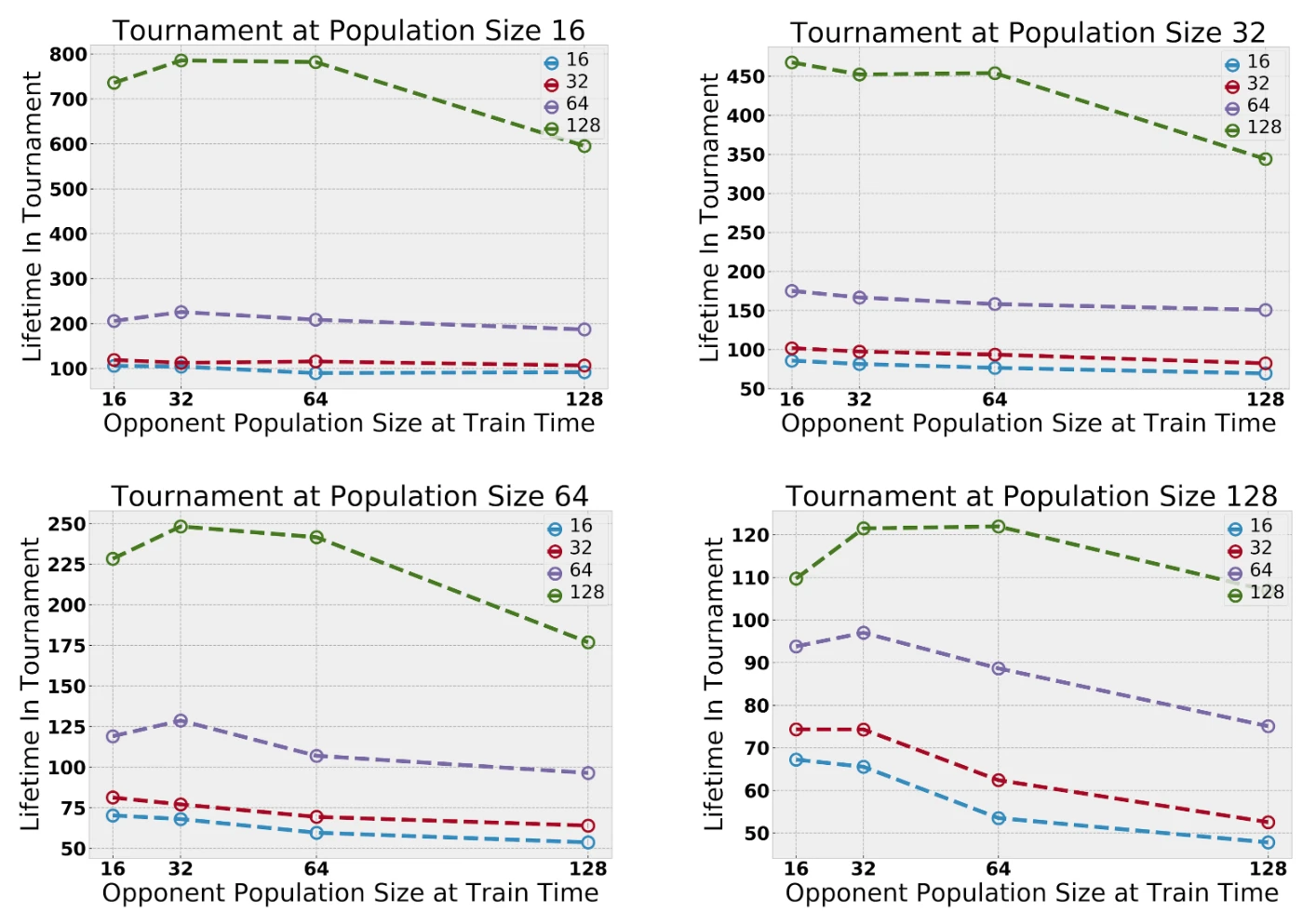
| What do they actually look like? | Chart pictures. A few are figures out of research posts; most are the picture inside an ad. |
| What are the two ways to go? | Keep infographic as a label of its own, or drop the word and let these be a Key Visual — the picture that carries a campaign. |
| What moves today? | Nothing. Whichever way you answer, no piece is touched until the grouping work runs. |
You approved your labels one at a time in August, and infographic was not among them. The database has been writing it anyway: 62 pieces carry that single word today. A label is the one word on a piece that says what kind of thing it is, so while this one sits there unexamined it is quietly doing your thinking for you.
So I went and looked at the pieces. The one the review page put in front of you is a chart out of a research post — four line graphs: lifetime-in-tournament across opponent population sizes — and it reads like a figure in a paper, not like designed marketing art. That was true of the one. It turned out not to be true of the pile: 47 of the 62 came out of the LinkedIn ad library, where they are the picture inside an ad, drawn by a designer. Both kinds are below so you can see the gap with your own eyes.
That gap is the whole decision. If infographic stays, it has to mean both the paper figure and the ad picture, and a word that means both is a word nobody can browse by. If it goes, each of these gets read once more and comes back as something you did approve — a key visual where it is the picture carrying a campaign, a product shot where it shows the thing, a figure inside an article where it belongs to the writing. Key Visual already sits on your Brand & Identity shelf, and a shelf is just a group you browse the labels by, so there is somewhere for them to land.
One more fact worth having before you answer: the picture-or-video field on every one of these already says image. The word infographic is not what tells you this is a picture. It is only claiming what kind of picture — and on the ad rows, it is claiming wrong.
My take: I cannot call this one for you, and I would rather say so than invent a preference — the two ways are genuinely level. If you want a tiebreaker, look at the ad picture below and ask whether you would ever go hunting for it by typing “infographic”.

OpenAI · its own website · 2026-06-02 · written on it: infographic · source

OpenAI · LinkedIn ad library · 2026-06-12 · written on it: infographic · source
What changes
If infographic becomes a label of its own, these 62 pieces keep their word and it takes a place beside Key Visual when you browse.
If it maps away, the word leaves the list and each of the 62 is read once more, coming back as a key visual, a product shot, or a figure inside an article.
What stays exactly as it is
Nothing moves today. Either answer executes later, alongside the rest of the grouping work.
The picture itself, the brand on it, where it ran and when it was published are untouched under both answers.
| Pieces carrying this word today | 62 |
|---|---|
| Of those, the ones that came out of the LinkedIn ad library | 47 |
What this call does to everything else written on these pieces
Nothing else written on these pieces changes. The brand named on them, the campaign they belong to and the crafts recorded underneath — data visualization on the research chart, graphic design and logo design on the ad — all stay exactly as they are, and the picture-or-video field already says image on every one, so no other fact is leaning on this word for its meaning. The only thing this call moves is which group you find the piece under when you browse, and, if the word goes, which single word it answers to.
The alternative, and its cost: Leave it open and come back to it. The cost is that 62 pieces stay filed under a word you never chose, and the pipeline keeps writing it — every new ad picture it reads gets the same word, so the pile you eventually have to re-read grows while the question waits.
Where this was worked out: the recommendation page, in the table of stored words that are not on your list
L-01: CONFIRM · L-01: CHANGE: what you would change · L-01: LEAVE OPEN: what you still need to seeL-02Podcast video · short
Do these keep the word “podcast video”, take the word “podcast episode”, or become interviews?
56 pieces carry podcast video today and neither that word nor podcast episode is on the list you approved — though the database has quietly kept podcast episode switched on, with 0 pieces under it. The rows are real conversations: a clip of Ben Goodger & Darin Fisher on the browsers they shaped, talking about the ChatGPT browser they had just built, and 24 of the 56 sit on YouTube rather than on the short-form feeds. The kind of piece is real, so the only question is its name.
My take: Give it the name podcast episode. “Video” is describing the medium, and the medium is already stored on the piece — but Interview, which you did approve, would swallow most of these if you would rather not add a word at all.

OpenAI · TikTok · 2026-06-17 · written on it: podcast video · source
What changes
56 pieces swap one word for whichever you pick, and if it is podcast episode the empty word finally has something under it.
What stays exactly as it is
The video, where it ran and who is talking in it — nothing on the piece itself is touched, today or later.
| Pieces carrying this word today | 56 |
|---|---|
| Of those, the ones on YouTube | 24 |
| Pieces filed under podcast episode today | 0 |
Where this was worked out: the recommendation page, in the table of stored words that are not on your list
L-02: CONFIRM · L-02: CHANGE: what you would change · L-02: LEAVE OPEN: what you still need to seeL-03Behind the scenes · short
Is “behind the scenes” a kind of piece, or a way of shooting one?
25 pieces carry it and they are exactly what the words promise — behind the scenes with shy kids: merging Sora with live-action footage for their short film. 16 of the 25 are on YouTube, so this is not one feed's habit; it is a thing brands keep making on purpose. The only real question is whether that is a kind of piece or a way of shooting one, because a behind-the-scenes cut of a campaign film is arguably still that campaign film.
My take: Keep it as a kind. You would go looking for it by name, and that is the test that matters — which also makes this the easiest of the six to settle.

OpenAI · TikTok · 2026-06-17 · written on it: behind the scenes · source
What changes
As a kind, the 25 pieces keep their word and it takes a place on a shelf.
As a way of shooting, the word comes off the piece and each one goes back to being the film it documents, with “behind the scenes” recorded as how it was made.
What stays exactly as it is
The footage, the brand and the date are untouched, and nothing moves today under either answer.
| Pieces carrying this word today | 25 |
|---|---|
| Of those, the ones on YouTube | 16 |
Where this was worked out: the recommendation page, in the table of stored words that are not on your list
L-03: CONFIRM · L-03: CHANGE: what you would change · L-03: LEAVE OPEN: what you still need to seeL-04System card · short
Does your Documentation & Technical shelf take “system card” as a word of its own?
14 pieces carry it and they are the real thing — the GPT-5.1 Instant and GPT-5.1 Thinking System Card Addendum among them, with 13 of the 14 published straight onto a web page rather than posted anywhere. Until you named a Documentation & Technical shelf there was nowhere for a document like that to sit, which is why the word got invented in the first place; now the shelf exists and holds white paper, specification, release notes and their neighbours. So the question is narrow: does that shelf take one more word, or is a system card a white paper with a different cover?
My take: Take the word. It is what the industry calls the document, and writing a white paper is a different act from publishing a safety card beside a model.
text only — no image on this piece
OpenAI · its own website · 2026-06-19 · written on it: system card · source
What changes
As a word of its own, 14 pieces keep it and your technical shelf gains an entry; folded into white paper, the word disappears and the pieces answer to that instead.
What stays exactly as it is
The document, its brand, its date and its link stay exactly as they are, and nothing moves today.
| Pieces carrying this word today | 14 |
|---|---|
| Of those, the ones published straight onto a web page | 13 |
Where this was worked out: the recommendation page, in the table of stored words that are not on your list
L-04: CONFIRM · L-04: CHANGE: what you would change · L-04: LEAVE OPEN: what you still need to seeL-05Vlog · short
Is “vlog” a kind of piece, or just the look of a series episode?
9 pieces carry it and they are all one thing: Nike Playlist episodes, like Chipping with Golfer Lucy Li! — 7 of the 9 on YouTube and the rest running as paid ads. Kind or look is a genuine coin-flip here, and with a pile this small you get to decide it on taste rather than on volume.
My take: I would let this one go. Vlog reads as a way of shooting rather than a kind of thing, the pieces underneath are episodes of a brand series, and 9 pieces do not earn a word on your list.

Nike · YouTube · 2026-06-06 · written on it: vlog · source
What changes
Kept, the word stays on 9 pieces; dropped, each one is read again and comes back as the series episode or brand film it actually is.
What stays exactly as it is
The video, the athlete in it, the channel it ran on — untouched, and nothing moves today.
| Pieces carrying this word today | 9 |
|---|---|
| Of those, the ones on YouTube | 7 |
Where this was worked out: the recommendation page, in the table of stored words that are not on your list
L-05: CONFIRM · L-05: CHANGE: what you would change · L-05: LEAVE OPEN: what you still need to seeL-06Event photo · short
Is “event photo” a word of its own, or are these pictures you already have a name for?
5 pieces carry it, and 4 of the 5 are DevDay photographs out of one studio's portfolio — the venue atrium and its ASCII flower mural, the keynote hall, the bracket wayfinding sculptures, the inflatable frog mascot. The one that is left is a Codex ad that got read as an event photograph, which is the honest argument for settling this rather than leaving it open: a word this thin catches strays. Your Events & Experiential shelf holds Event Film, Keynote and the booth piece, so the pick is whether photography joins them or whether these are simply key visuals that happen to have been shot at an event.
My take: Settle it either way. With a pile this small the cost of being wrong is tiny, and the cost of leaving it open is that the pipeline keeps filing ads here.

OpenAI · a studio's portfolio · 2026-07-20 · written on it: event photo · source
text only — no image on this piece
OpenAI · LinkedIn ad library · 2026-06-12 · written on it: event photo · source
What changes
As a word of its own, event photography joins your events shelf and the 5 pieces keep their word.
Mapped away, the photographs become key visuals shot at an event and the stray ad goes back to being an ad.
What stays exactly as it is
The photographs, the studio credit, the links to where they were published — untouched, and nothing moves today.
| Pieces carrying this word today | 5 |
|---|---|
| Of those, the DevDay photographs from the studio portfolio | 4 |
Where this was worked out: the recommendation page, in the table of stored words that are not on your list
L-06: CONFIRM · L-06: CHANGE: what you would change · L-06: LEAVE OPEN: what you still need to seeL-07The nine that are already settled · short
Can I take the nine stored words that already have an agreed fate as one batch — confirmed unless you strike one?
Nine of these stored words are not open questions at all: each has a proposed fate, none of them depends on which way the six above go, and together they cover 4,050 pieces. The two giants tell the whole story — social post and social clip — where “social” was written down as what a piece IS, when it is really where the piece ran: the post below is one person vouching for a product, a Sora clip is a slice of brand filmmaking, and neither of them is “a social”. The other seven are smaller versions of the same correction, listed underneath.
My take: Confirm the nine as a batch and strike anything that reads wrong. The one I would expect you to argue with is documentary, because a feature-length documentary does feel like a kind of film rather than a flavour of one.
text only — no image on this piece
OpenAI · LinkedIn ad library · 2026-06-12 · written on it: social post · source

OpenAI · a studio's portfolio · 2026-07-20 · written on it: brand asset · source

Nike · YouTube · 2026-06-06 · written on it: documentary · source
What changes
Social post — 2,518 pieces. “Social” moves to where-it-ran and each piece is read again for its real label; the one below opens “GPT-5.5 is here! Have been daily driving this model for a few weeks…” and is really an endorsement.
Social clip — 943 pieces. The same move; that it is a video is already stored on the piece.
Blog post — 290 pieces. Refined into the editorial words you approved: announcement article, feature article, thought leadership, tutorial.
Feature launch — 188 pieces. A launch is a fact about a campaign, never a kind of piece; the word moves there.
Case study video — 68 pieces. Folds into case study, because the piece already records that it is a video.
Documentary — 19 pieces. Becomes a flavour carried by a film label — “The Final Year | Ep. 4 | Sue Bird and Diana Taurasi: The Greatest Duo”, the Nike x TOGETHXR series, stays a film that happens to be documentary.
Brand asset — 13 pieces. Splits across your identity words — key visual, logo animation, template, brand guidelines, icon system. Its real rows are the DevDay embroidered patches below, and the motion loops from that same job: identity work, mis-filed.
Livestream — 10 pieces. Being live is how it was distributed; the piece underneath is a keynote, a webinar or an event film.
Animated explainer — 1 piece. Folds into explainer, because animation is already recorded as a craft.
What stays exactly as it is
Nothing is written on any piece today. All nine execute later, with the rest of the grouping work, and identically whichever way the six open words above go.
No piece changes its picture, its brand, its date, or the campaign it belongs to.
| Pieces that find a new home across all nine, added up | 4,050 |
|---|
Where this was worked out: the recommendation page, in the table of stored words that are not on your list
L-07: CONFIRM · L-07: CHANGE: what you would change · L-07: LEAVE OPEN: what you still need to see